Begin with the surface
Choose a permitted, stable area before spreading the blanket. A waterproof backing may help with damp ground, but it does not make a cold or uncomfortable surface suitable for everyone. Check whether a bench, low seat or table would work better for the people taking part. Place the blanket where its texture catches light without leaving faces in distracting patches of sun. Then make a simple test photograph before unpacking the entire basket.
Pick one visual anchor: a woven basket, a folded cloth or a small cluster of reusable dishes. Let the other objects support it rather than compete. A restrained palette can make a scene easier to read, especially when grass and foliage already supply plenty of detail. You do not need matching accessories. A repeated warm tone or similar texture can connect ordinary items without turning the picnic into a product display.
Arrange for the camera, not a catalog
Start with the camera position and build only what that frame needs. From a low angle, the basket can become a useful middle-distance shape with grasses behind it. From a higher angle, blanket edges and napkin folds become graphic lines. Avoid balancing on furniture or standing on unstable ground to get an overhead image. If a safe higher position is not available, make a diagonal composition from a comfortable standing or seated height instead.
Group objects loosely rather than spacing everything evenly. Give the main item a little breathing room and watch how smaller shapes overlap. A cup partly hidden by a basket may look accidental, while a hand entering the frame can explain why the cup is there. Take one photograph, remove one distracting object and compare. Subtraction is often more useful than adding another prop, particularly when the blanket has a strong pattern.
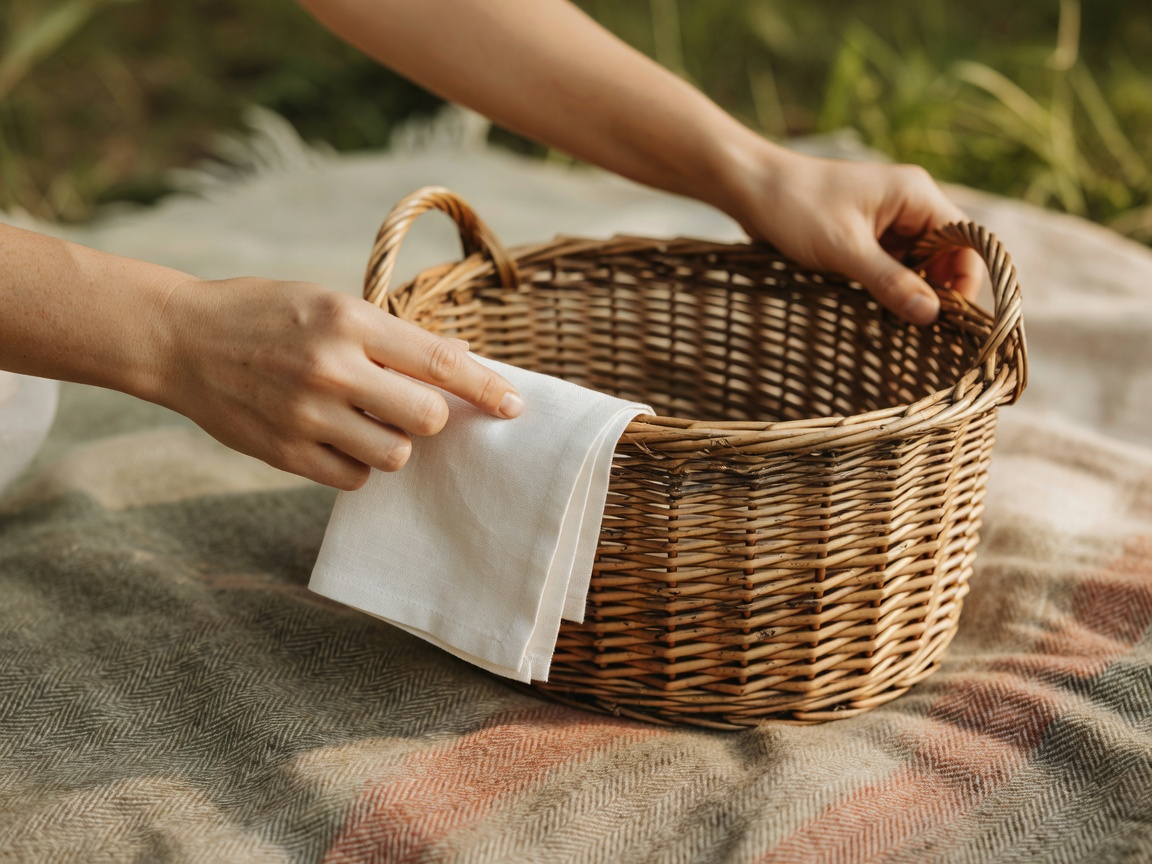
Example arrangement: one basket near the back edge, a folded napkin in the middle and a reusable cup beside a relaxed hand. This is a composition example, not a food-safety setup or a prescribed shopping list.
Give the frame a sequence
Make a setting photograph before moving in close. Include enough of the surroundings to show where the picnic belongs, then create a medium frame of someone settling or arranging a small item. Finish with details: woven fibers, a sleeve beside a cup, soft grass beyond a blanket corner. The sequence provides context and variety without requiring a larger setup. It also gives participants useful breaks between portraits.
For details, focus on the object that matters rather than automatically using the widest aperture. A very shallow depth of field may render most of a basket or several hands unrecognizable. Stop down or step back when the story needs more than one plane of focus. With a phone, move slightly farther away if close focus struggles, then crop modestly. Check artificial portrait blur around basket handles, fingers and wispy grass; those edges can reveal processing errors.
Keep food and props practical
Use food that you genuinely intend to eat and keep it protected until needed. Follow current food-safety guidance from an appropriate authority, such as the UK Food Standards Agency or the US Food and Drug Administration, for chilling and handling perishables. Do not leave food out simply to extend a shoot. Keep hot drinks stable, check allergies with participants and avoid feeding wildlife. A closed container can be just as useful in a photograph as an open spread.
Skip loose confetti, glitter and anything likely to blow away. Avoid placing glass where it may break or lighting candles where fires are prohibited. Bring a bag for waste, including small packaging tabs that are easy to miss in grass. Natural foliage can stay in the background rather than being picked for styling. The aim is a small, reversible arrangement that can be packed away quickly if conditions change.
Let seasonal detail stay subtle
Spring and summer
Use lighter fabrics against fresh foliage, but keep the scene grounded in what is actually present. Seek shade for comfort and preserve access around flower beds. In warm conditions, keep food chilled and shorten the session when heat becomes uncomfortable.
Autumn and winter
Echo existing leaf colors with a scarf or cloth rather than gathering material. Cooler days suit layered textures, but the participants’ warmth comes first. Wet leaves and frost can affect footing; a seated indoor fallback may be more appropriate than continuing outdoors.
Include people without overdirecting
Ask an adult participant to place a napkin, open a book or rest a hand beside the basket. Choose an action that is comfortable, accessible and easy to repeat. Do not ask someone to keep holding a strained position while you adjust the camera. Make the adjustment first, explain the next action clearly and photograph a short sequence. Quiet, believable gestures usually connect props and people more successfully than elaborate staging.